Photographing Through Glass: Lessons from the Aquarium
By Ceci Ellis
Aquarium photography sounds simple until you try it: you're shooting through glass, in low light, at subjects that don't hold still and don't take direction. I spent an afternoon at OdySea in Scottsdale finding out exactly how many of my usual instincts don't apply once there's a tank wall between me and the fish.
The jellyfish were the easiest win of the day, by a wide margin. Whatever lighting the tank was using threw the water a deep, saturated blue, which meant the orange and rust-colored jellyfish practically glowed against it, pure complementary colors doing half the composition work for me. They also barely move with any speed, drifting rather than swimming, which meant I actually had time to focus and frame instead of firing blind and hoping.
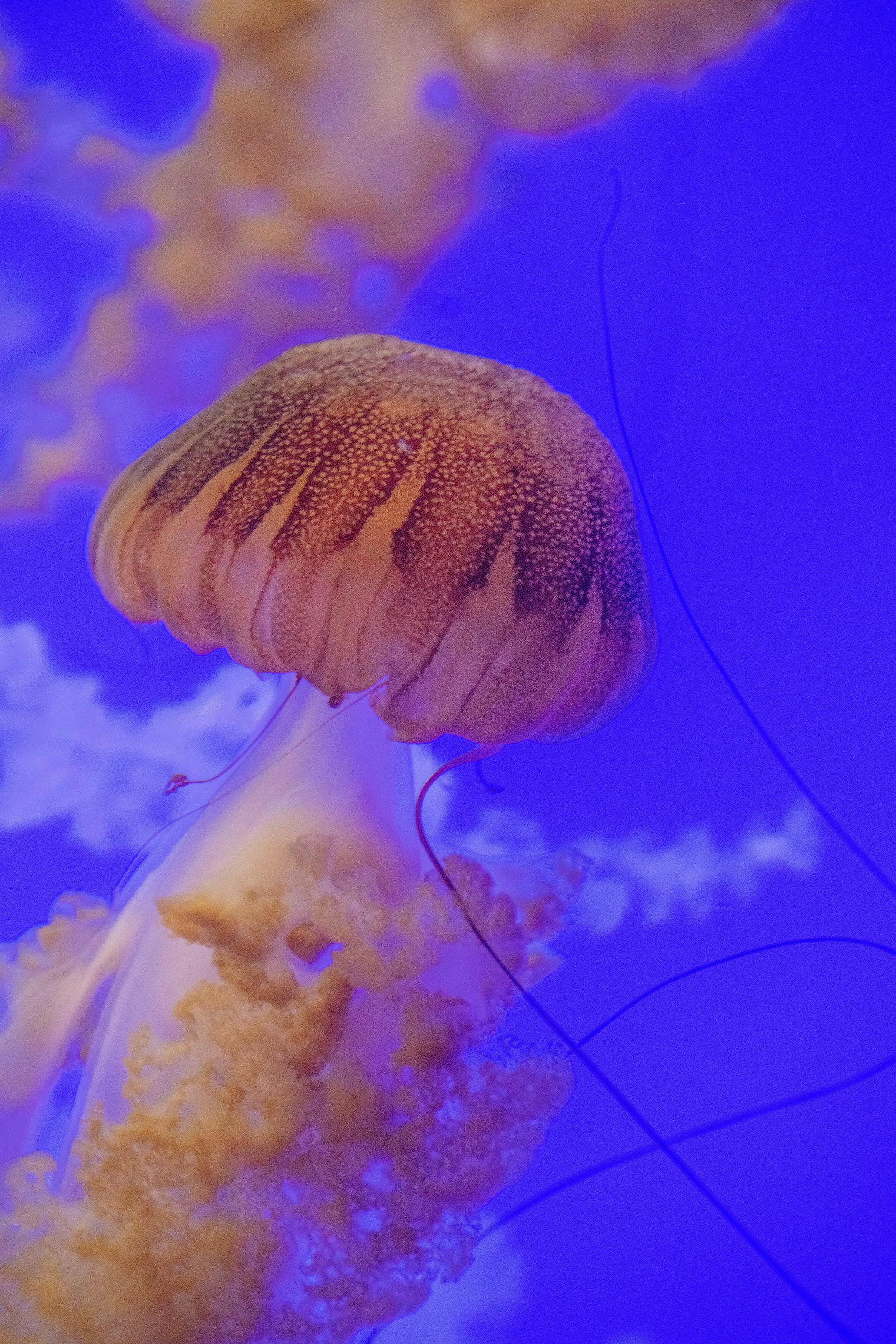
Spotted Jelly / Golden Jelly (Mastigias papua)
For anyone wanting to shoot in an aquarium themselves, here's what I'd actually change. Push the shutter speed to at least 1/250, faster if the tank allows it, even if that means letting the ISO climb into the 3200-6400 range; a modern sensor handles high ISO noise far better than it handles motion blur, and noise is something Topaz DeNoise can clean up afterward while a soft, blurred fish is just gone. Shoot in RAW no matter what, since tank lighting swings wildly from tank to tank and you'll want the flexibility to fix white balance later rather than guessing at it in the moment. And DO NOT use a flash, mostly because most aquariums don't allow it and because it does nothing but bounce straight back off the glass into your lens.
It presses flush against the tank glass and blocks the reflections and glare that would otherwise put your own face, your flash, and half the lights in the room right back into the shot. It works.
The problem is logistics: in a building full of other people also trying to see the fish, you can't always plant yourself against the glass with a rig strapped to your lens for as long as you'd like. Half my morning was a negotiation between getting the angle I wanted and not being the person hogging the best viewing spot.
And then there were the kids. More than once, mid-shot, a child literally ran straight over my feet chasing something to the other end of the tank, camera still up, focus lost, moment gone. Nobody's fault, that's what an aquarium actually is: a place built for families first and photographers a distant second. You're not shooting in a quiet studio. You're shooting in the middle of someone else's field trip.
If you want to try this yourself without OdySea's ticket price, SEA LIFE Aquarium near AZ Mills in Tempe has a lot of the same species and is worth checking out if you're just practicing technique rather than chasing a specific animal.
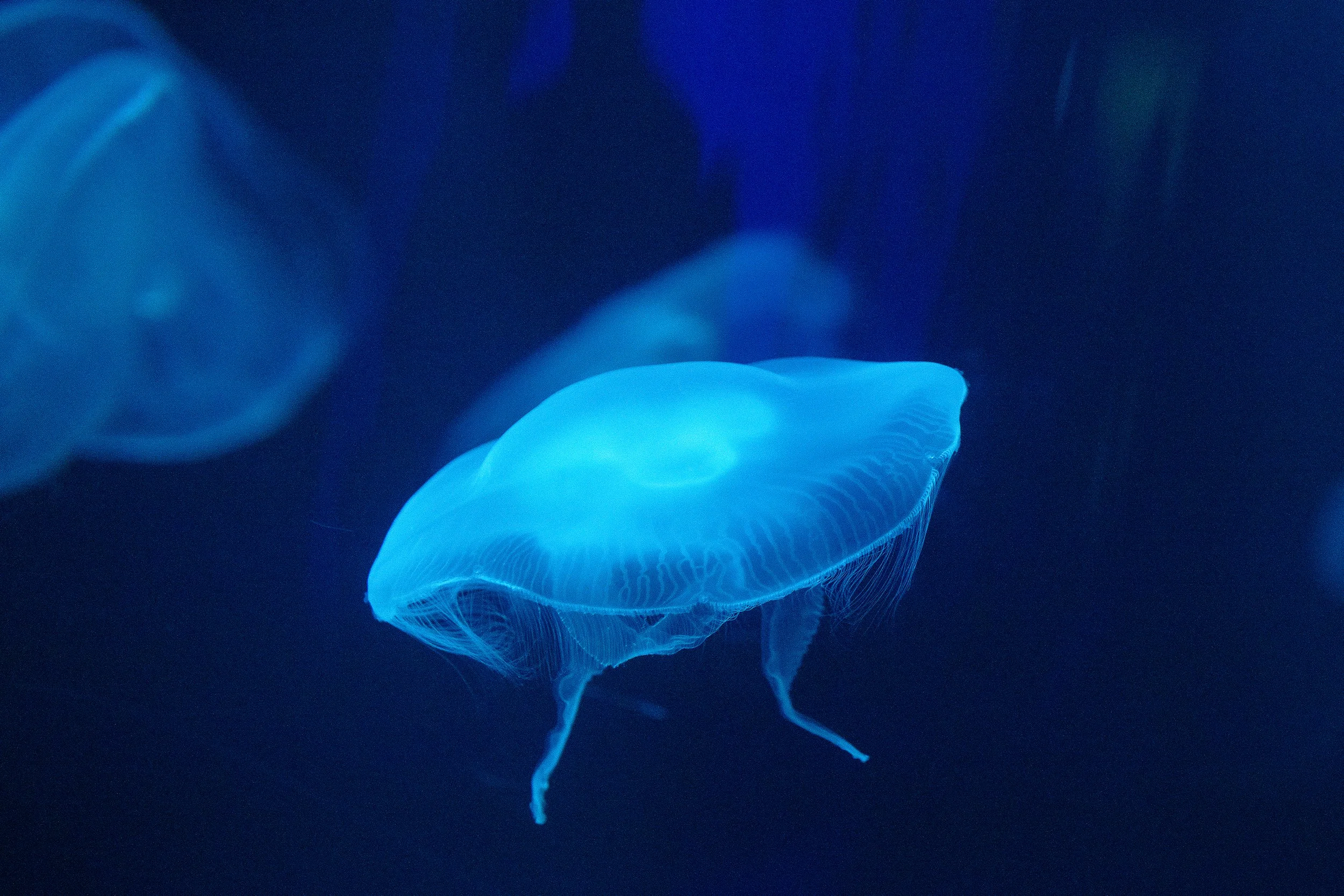
Moon Jelly (Aurelia aurita)
Almost nothing else in the building gave me that kind of time. The otters were simply too fast, darting and rolling through the water faster than I could track them through the viewfinder. The penguins should have been easier since they were mostly out of the water, but the viewing window up top was splashed and smeared badly enough that I couldn't see them clearly even with my own eyes, let alone a camera. The skates were quick too, though not impossible, and in the same tank I managed to pull a couple of genuinely good shark shots almost as a consolation prize.
Looking back at the settings, I can see exactly where I went wrong. I was shooting at 1/100th of a second, wide open aperture, ISO 2000 on my Nikon D850, numbers that made sense for the low light but weren't fast enough to freeze anything that moved with real speed. A lot of what I brought home needed real rescue work afterward: correcting the white balance the tank lighting had thrown off, and running Topaz DeNoise along with the usual Photoshop and Lightroom passes to cut noise and sharpen shots that came out a little soft.
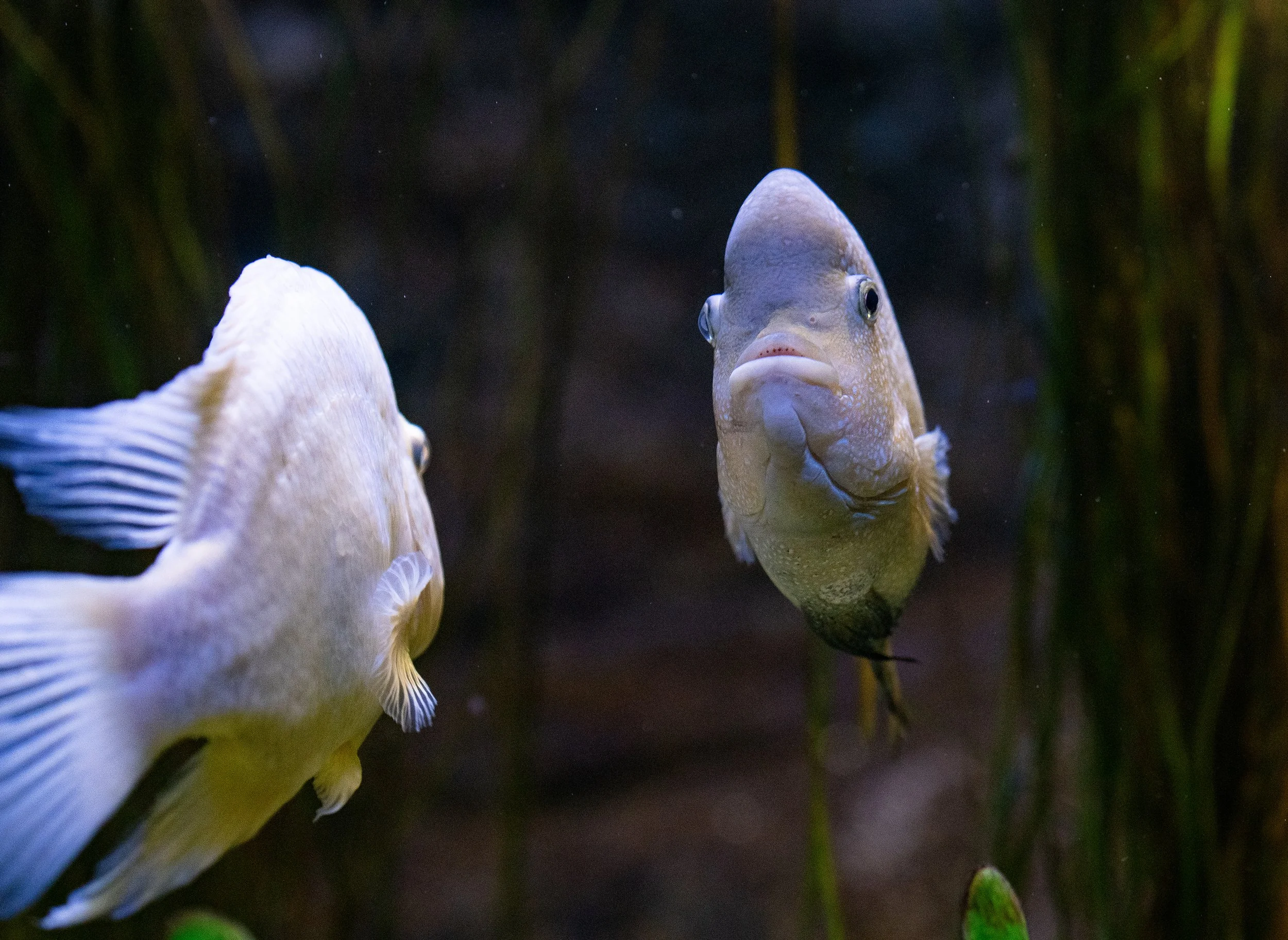
Red Devil Cichlids (Amphilophus labiatus)
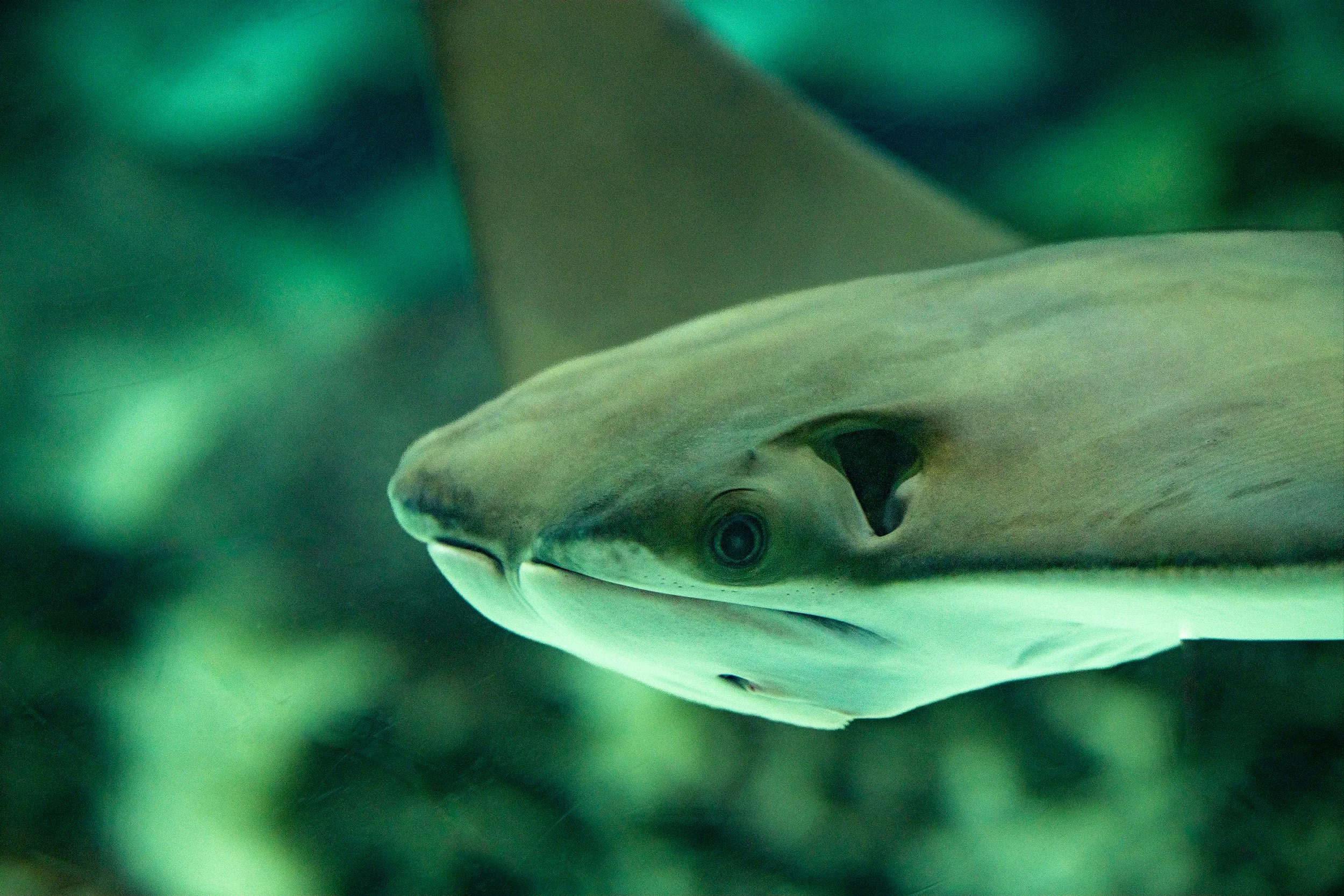
Cownose Ray (Rhinoptera bonasus)