Are Business Cards Becoming Obsolete?
By Ceci Ellis
I secured a donation for Liberty Wildlife at 30,000 feet, somewhere between Detroit and Denver, using an app on my phone.
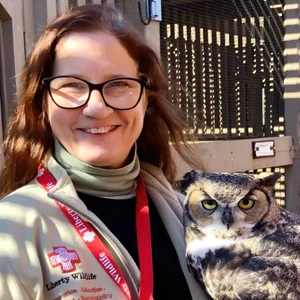
Somehow, I'd gotten bumped up to first class (Never want to fly any other way again), and ended up sitting next to a surgeon on his way to Colorado to ski. We got to talking, the way you do on a long flight, and at some point, I pulled out my phone to show him pictures of the birds I work with at Liberty Wildlife: a peregrine falcon, my favorite great-horned owl, and a red-tailed hawk mid-flight. He thought it was incredible. He asked how he could donate. I opened HiHello, pulled up my Liberty card, and handed him my phone so he could scan the QR code himself. Web page, contact info, donation link, all of it right there. No paper changed hands. No pen. No fumbling through a bag for a card I probably didn't have on me anyway. He said it was the easiest business card exchange he'd ever had, and I don't disagree.
That's when I started asking myself whether business cards are actually becoming obsolete, or whether they're just changing shape.
At Bees' Knees, we still design business cards for clients. If people ask for them, we make them, they look good. I'm not walking away from that work. Printed cards are also proof of the risk: we ordered a thousand of them for Sean, and by the time he'd handed out maybe a hundred, his info had drifted out of date. (he never wanted to hand them out🤷🏼♀️) We ended up tossing the rest. Our own Bees' Knees card comes with its own headache: we never printed enough to justify a die cut, so for years I cut every single hexagon out by hand.
Trade shows, open houses, chamber of commerce mixers: there are still rooms where people expect to leave with something they can hold, and a printed card reads as more legitimate than a phone tap in front of a client. But personally, I've stopped carrying cards for either Bees' Knees or Liberty. I use HiHello instead, a free app that turns your contact info into a digital card with a QR code attached. Someone points their camera at it, it pulls up a web page with everything on it, and they tap whatever field they want to save: phone, email, website, whatever. It costs nothing, it never runs out, and it works whether I'm in the air or on terra firma.
Out in the field is actually where the real answer showed up. When I'm out rescuing a bird and someone stops to ask what's going on, I don't usually have a stack of cards on me. I've got gloves on, sometimes a bird in my grasp. My hands are full. But I always have my phone. I pull up the link, they scan it, and now they've got the Liberty website saved before I've even finished explaining what a wing check is.
So no, I don't think cards are dying. I think they're splitting into two different jobs.
Digital wins when you're in front of someone: a plane seat, a field rescue. It never leaves you saying "I'm out, sorry."
Paper still wins somewhere digital can't reach; when nobody's there to scan anything. I see it around my own neighborhood constantly. Landscapers and handymen still leave a card wedged in the door after they knock and nobody answers. So do real estate agents leaving flyers under windshield wipers, and restaurants that still slide a menu under the door. A QR code can't do that job.
I'll keep designing cards for clients who want them. But if you catch me at 30,000 feet, don't expect me to hand you cardstock. You're getting a QR code, and probably several pictures of birds.
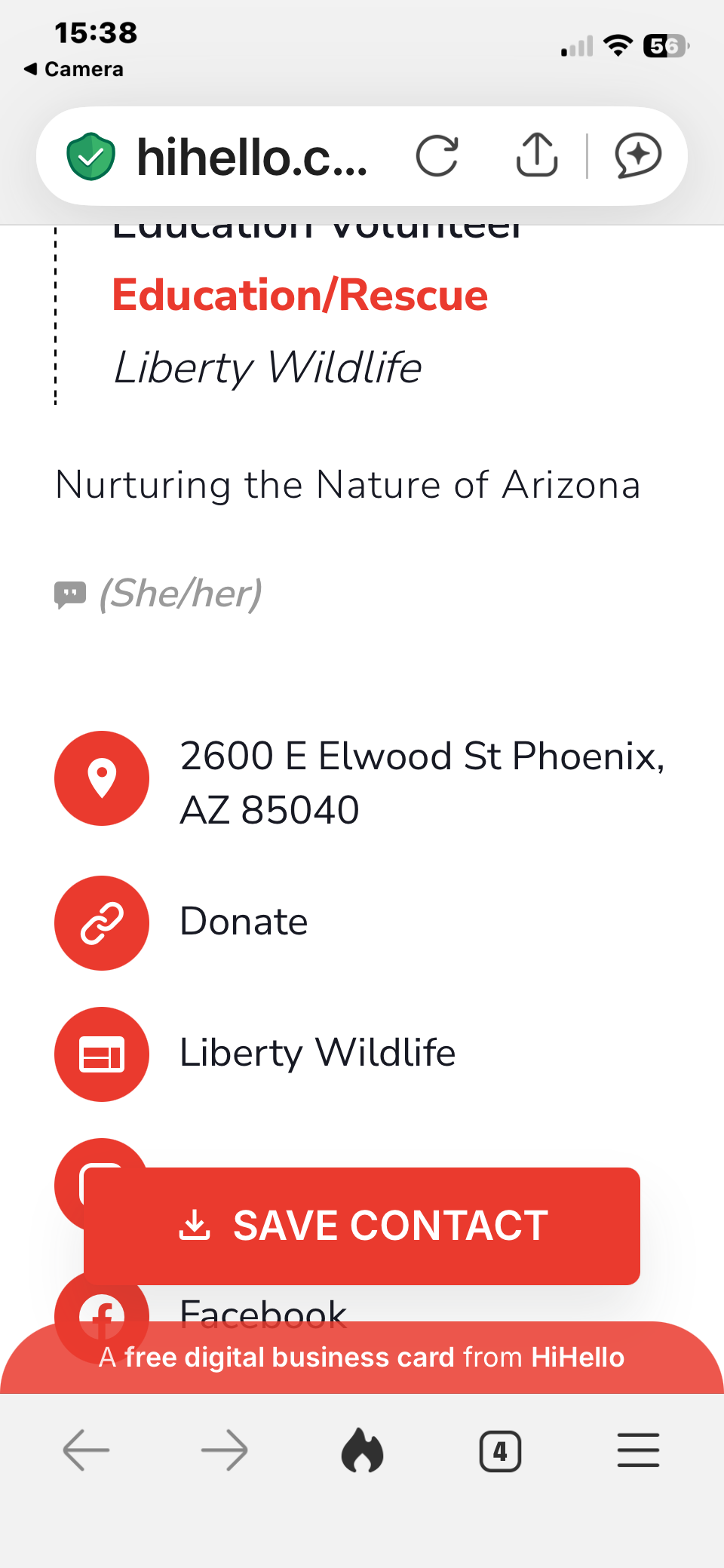
What a HiHello Digital card looks like
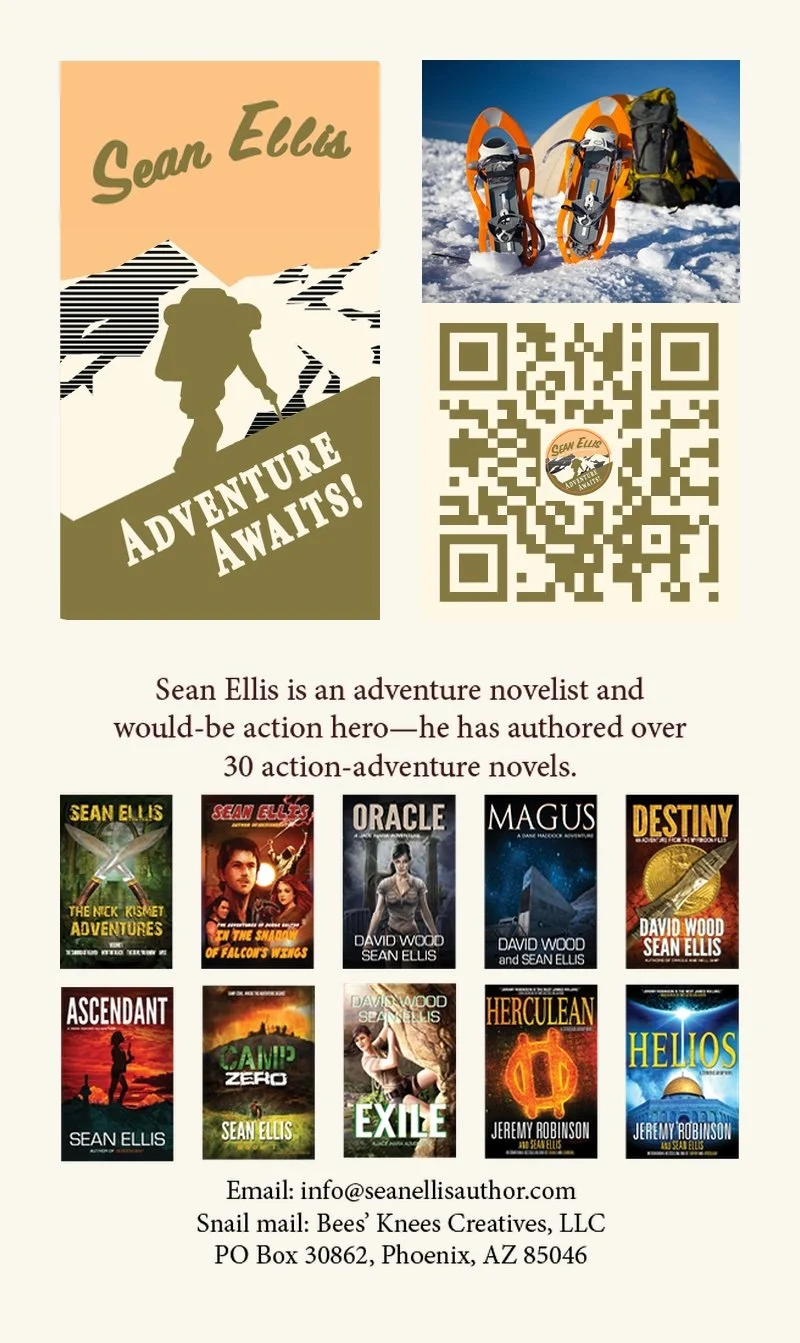
Inside and outside of Sean Ellis Business card
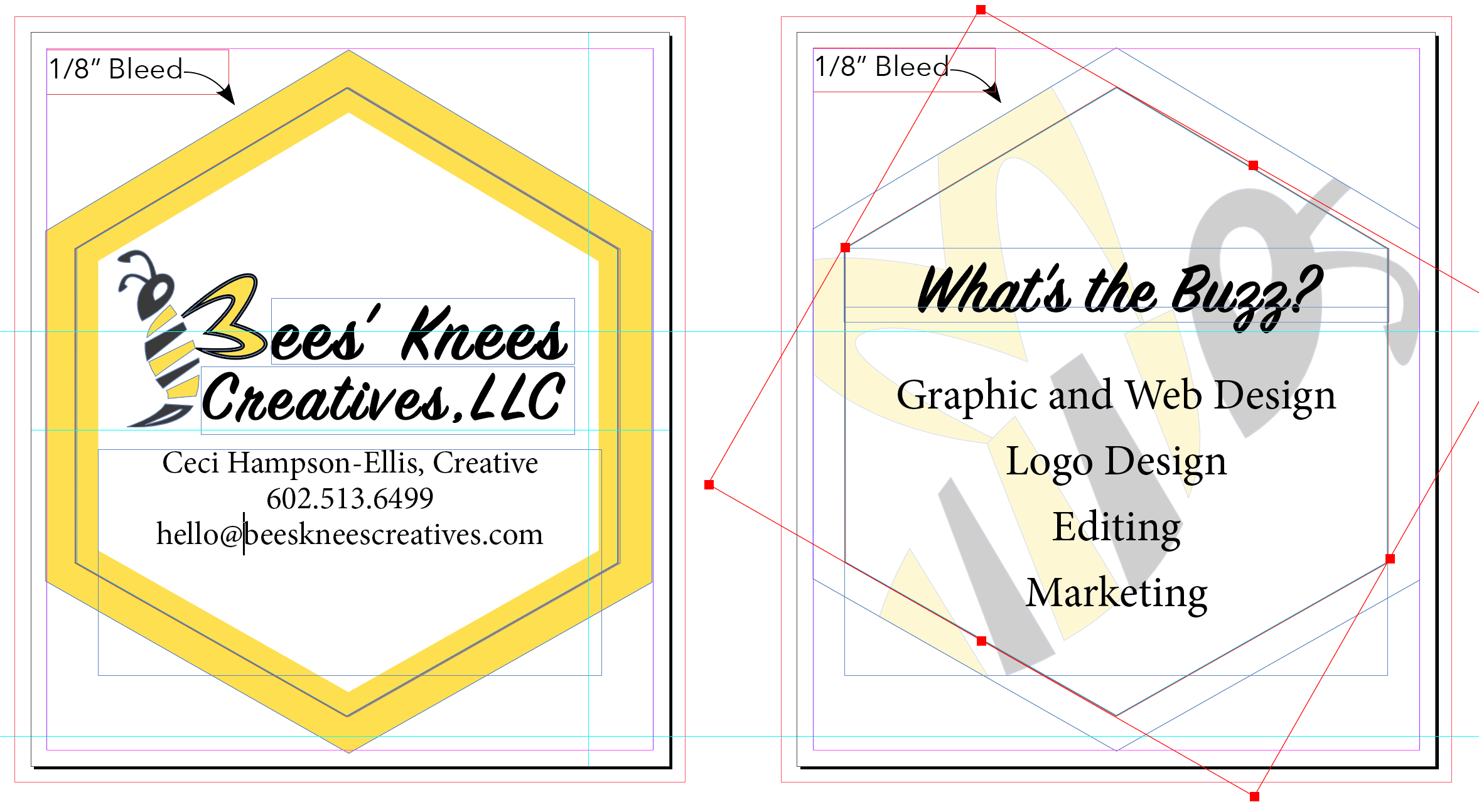
Front and Back of the BKC card hand trimmed