Giving Characters Something to Do With Their Hands
by Ceci Ellis
There’s a little of me in every character I write. Not the plot, usually, and not the circumstances, but a fear here, a habit there, a way of handling bad news that I recognize because I’ve handled it that way myself. That’s where most of my characters start, and it’s also how I keep them from becoming two-dimensional.
Sometimes it’s something small. In Barbie and Kennie, Jo is all about the shoes in her Barbie case, probably because she has to wear saddle shoes herself. I wore saddle shoes as a kid and desperately wanted patent leather Mary Janes, so a drawer full of tiny shoes is exactly where my own longing ended up.
Flat characters happen when an author tells readers who someone is instead of letting them watch who they are. “She was anxious” is a label. A woman who wears tracks into her own carpet, picks up the phone, scrolls through her contacts, and sets it back down is a person. In Not Only Anymore, the narrator receives a letter she has waited decades for, and I never say she’s terrified. She leaves it unopened and goes for a run without knowing whether she’s running from something or toward it. Four miles later it’s thirst, not courage, that drives her home. She starts the coffee maker with water and forgets the coffee, and the cats’ dinner is late. Nobody has to explain what’s going on inside her.
Habits are the easiest way in, but they work best when they’re specific to the person. In Back Room Deal, I had a room full of powerful men all reacting to the same news, and they could have blurred together. So I gave them different nervous tells. The Pakistani Prime Minister wrings his hands and keeps mopping his brow. The President nearly snaps a button off his coat. The General laughs a little too late at the wrong moment. None of them announces how scared they are. The sweating does it for them.
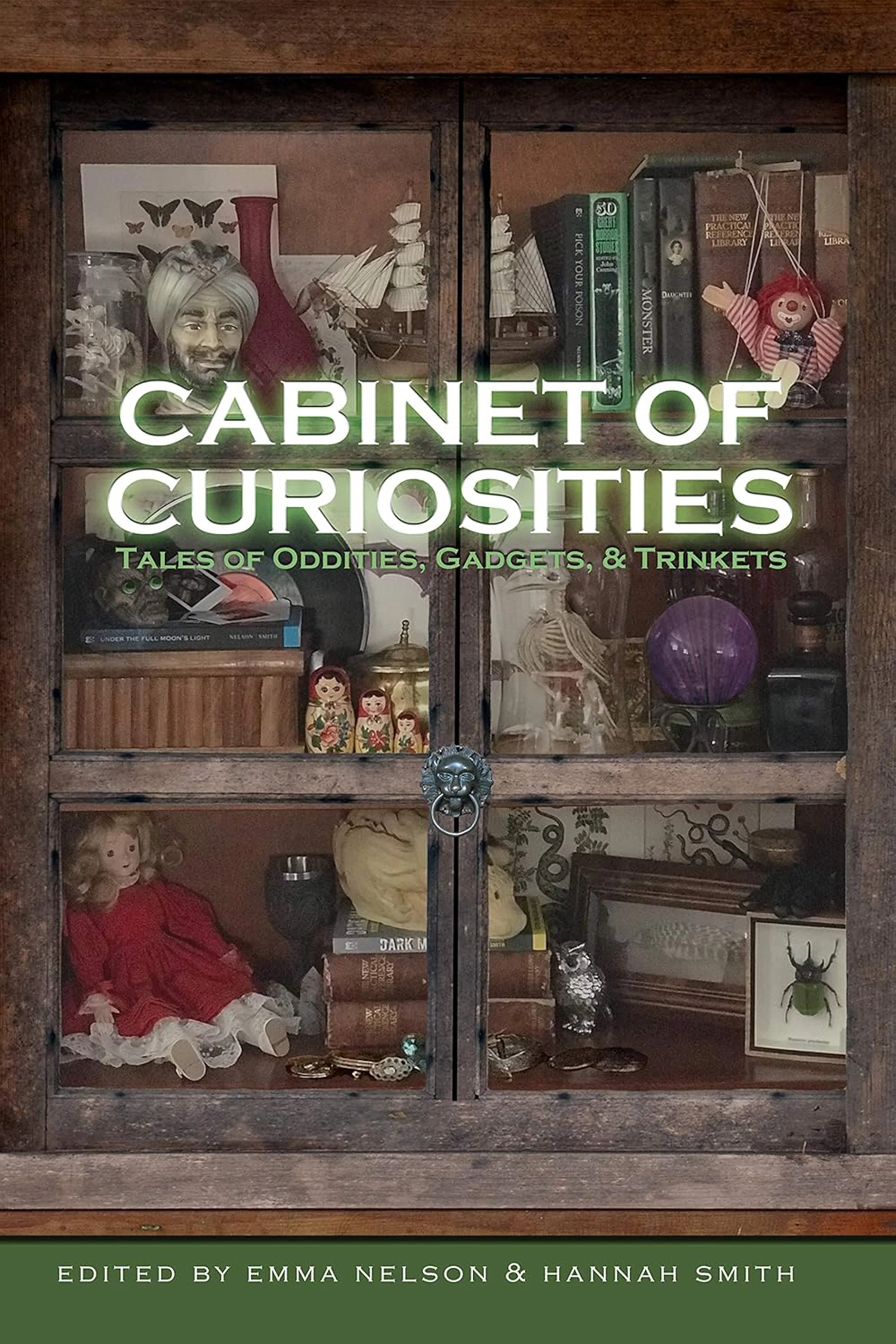
cover of Cabinet of Curiosities, published by Owl Hollow Press
Then there’s the motivation, which is where characters gets their shape. Kennie, in Barbie and Kennie, collects vintage toys because they remind her of the childhood she always wished she’d had. That one small, slightly sad want explains almost everything she does. It explains the yard sales, the restored 1964 VW Beetle she calls her sailboat, and why a tingle in a doll’s tiny hat sends her across the county to a records office in Norwalk. She’s a woman who doesn’t put much stock in anything woo-woo, but can’t let it go. She even tells the seller a small lie to get the information she needs. A contradiction like that makes a character feel like someone who could exist outside the page.
I won’t spoil what she finds, but I will say that none of it would have landed, if I hadn’t, in small ways, first shown what she was missing, .
Whenever I get stuck on a character, I go back to a short list: what do they want, what are they afraid of, what do they do when no one’s watching, and what would they never admit out loud? Then I try to answer each one with something a reader could see, not something I could explain. A character who only exists to move the plot forward is just furniture. Give them something to do with their hands, and the rest tends to follow.
The stories mentioned here: Barbie and Kennie appears in Cabinet of Curiosities from Owl Hollow Press (2019). Back Room Deal and Not Only Anymore were both published in Palo Verde Pages, a Phoenix-based literary magazine that is no longer in print.